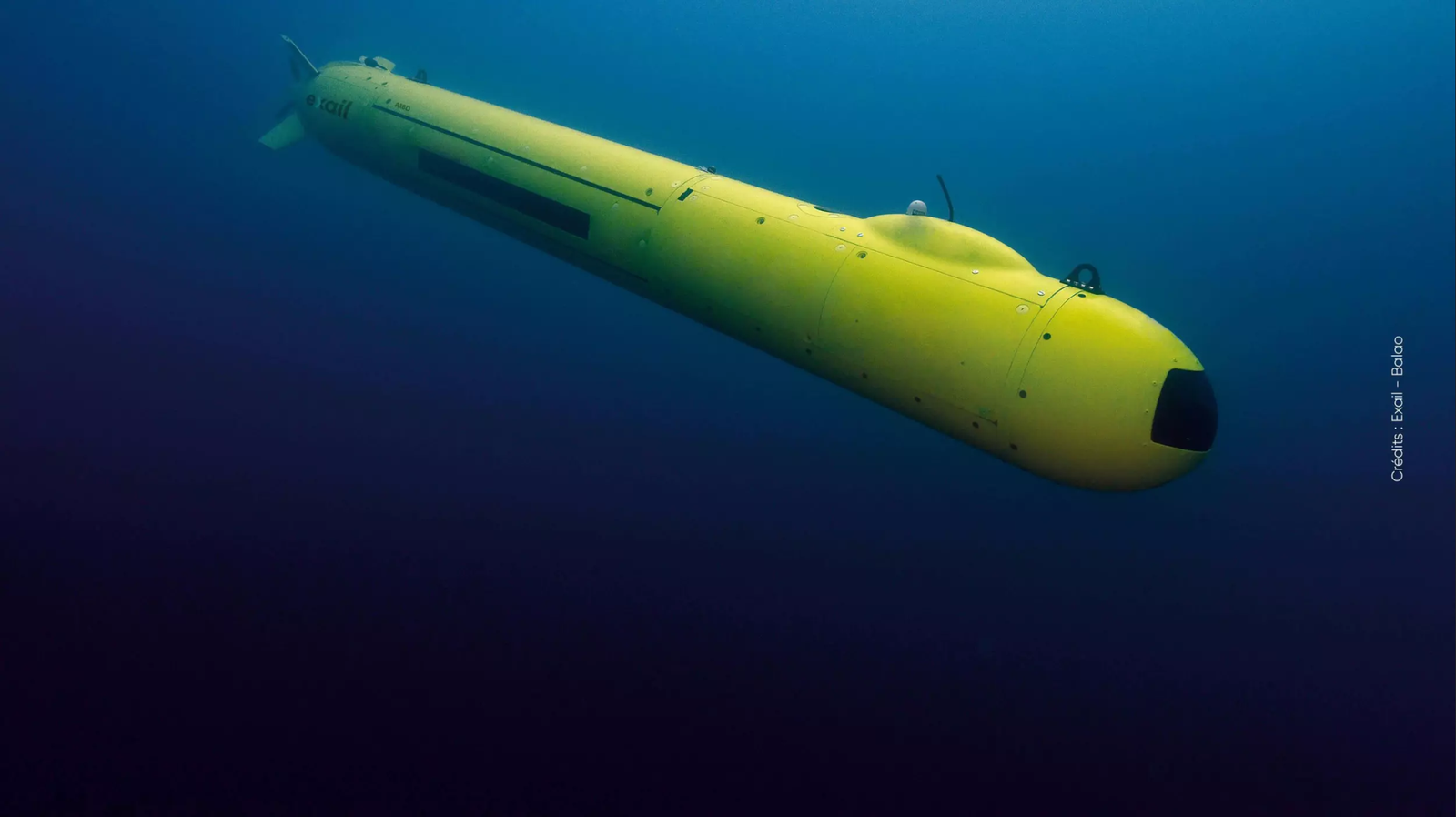
Exail’s A18D autonomous underwater drone . Source
Some might consider that the next frontier of humanity is space. There is one however much closer to home that is less obvious to the general public. The sea and its depths. While 70% of the Earth’s surface area is covered by water, over 95% of it remains unexplored.
Needless to say, the sea has been, is and will remain in human history of vital importance to nations and powers alike. Much ink has been spilled on the subject matter by naval strategists such as Alfred Mahan, Julian Corbett or Admiral Raoul Castex. While I will not be delving into the specifics on naval strategic theory in this article, it is however a subject that merits interest if you haven’t had the occasion to look into it.
The fact remains that knowledge of what was goes on at sea, and especially today what goes on below, is of vital importance to naval powers. And yet, most of it remains unknown to us. Only 3% of the planet’s seabed has been accurately mapped out.
As technologies have evolved, new fields and opportunities have opened. For decades the oil and gas industry has been at the forefront of exploration. Today however, it is the states and their military apparatus that are leading the charge as new opportunities are arising for offensive and defensive actions with the progression of technology. And of course, drones have a role to play.
Whoever manages to harness first the technology to overcome the different constraints of the seabed will have a considerable edge in the years to come, especially as geopolitical tensions continue to flare. So given that, we are going to look today at what is the seabed, what are the current challenges that states face and how drones fit in the picture.
Why is the seabed important?
This is quite a technical subject so I will spend some time explaining the different constraints of such an environment. The seabed remains mostly unknown. Its opacity makes it a particularly interesting domain for states wishing to operate with a level of discretion that is harder to obtain in the air or on land. This is particularly true when it comes to “grey zone” warfare.
What is grey zone warfare?
Gray zone warfare is an operational space between peace and armed conflict where actors compete to gain a strategic advantage on their competitors. It is often conducted by great and regional maritime powers. It is defined by the deliberate usage of methods and actions that remain below the threshold of an overt use of military power, utilizing ambiguity and incrementalism (also called salami slicing tactics) to achieve tangible gains for the achievement of strategic goals.
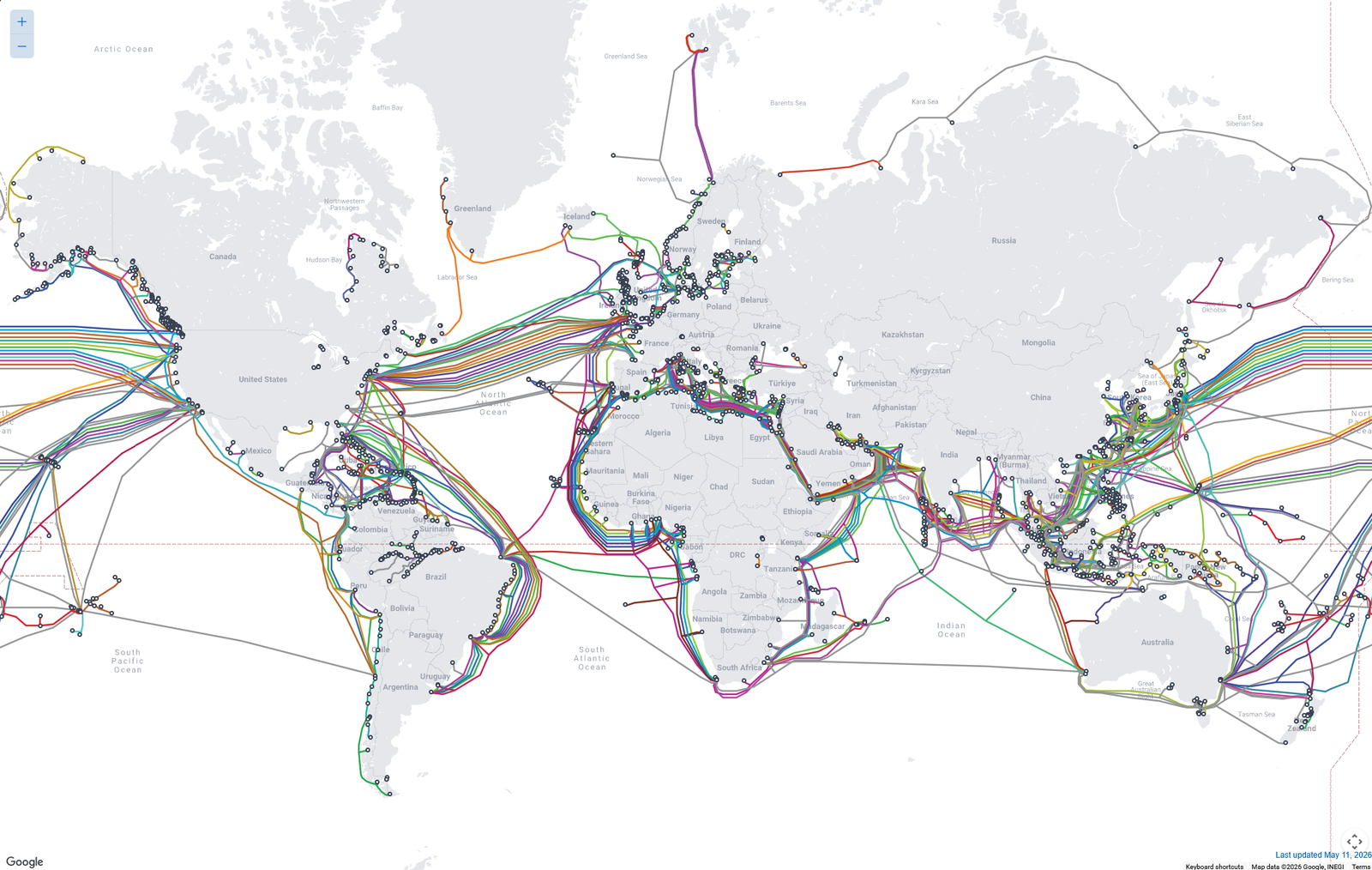
Map depicting the different submarine cables present below the sea. Source
Apart from its characteristics which makes it interesting for navies from a military point of view, it is also of vital economic interest and needs to be protected.
The seabed contains immense and largely untapped economic potential. Its floors are littered with mineral, biological, and fossil resources including oil, gas, and polymetallic nodules. It’s no coincidence that one of the pioneers in the exploration and prospecting of the ocean were major gas companies seeking deposits for offshore drilling for oil and gas, pushing the development of ROVs and AUVs. It is therefore vital for energy independence.
It is also one of key components of the physical infrastructure of globalization with around 300 to 450 submarine cables carrying 99% of all intercontinental digital data traffic which incidentally is quite useful in an interconnected world.
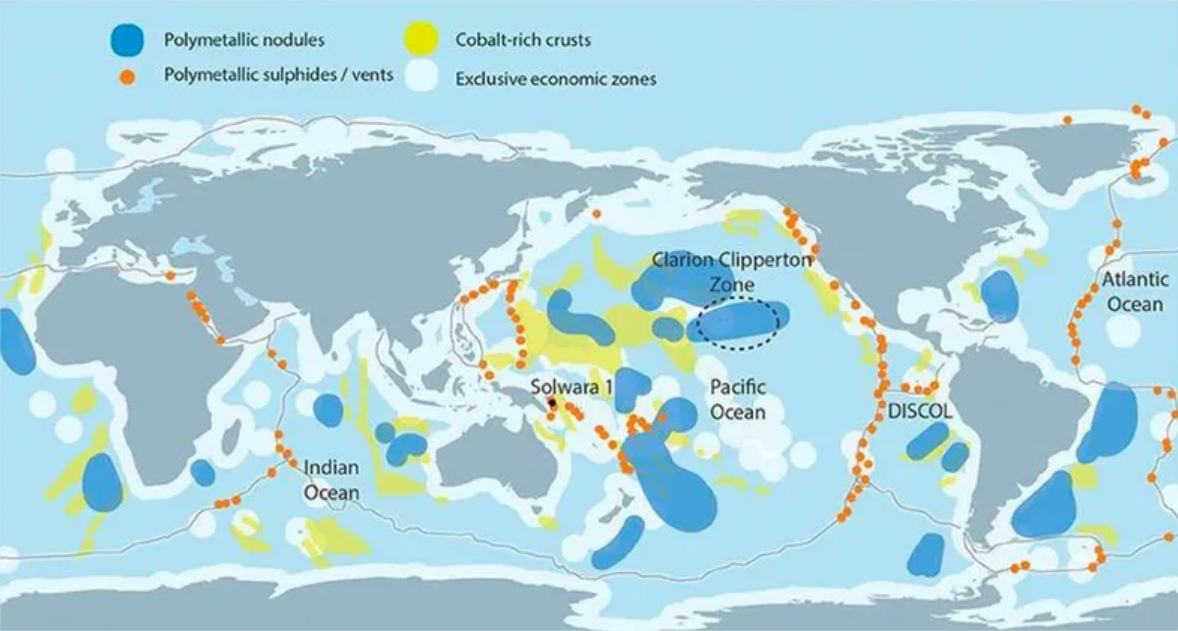
Map depicting subsea mineral reserves. Source
The seabed is also not considered part of the Exclusive Economic Zones of states which confers a right to exploit any potential resources but doesn’t not offer full sovereignty over the area, creating a legal loophole and a window of opportunity for hostile actors.
The seabed is therefore an area that offers opportunities for states to conduct operations but is also worth safeguarding. While some operations are already being conducted by state actors in the frame of grey zone warfare, the question remains of what would happen if an open conflict would erupt between two major naval powers with competing interests.
However, the seabed posits numerous challenges to be overcome to exploit its full potential.
The natural Challenges of seabed warfare
The natural and geographical elements of the seabed present a hostile environment that makes the conduct of seabed warfare exceptionally difficult. These challenges stem from the fundamental physics of the ocean, which limits sensing, movement and communication in ways that do not exist in other domains.
The most significant barrier to seabed operations is the opacity of seawater. As seawater rapidly absorbs electromagnetic waves, radio frequencies and satellite global navigation satellite systems (such as GPS or GNSS) are simply unavailable once a vehicle is submerged. Other high-speed forms of communications or optical systems such as lasers are also severely impacted, restricting the effective range to around 250 meters. Beyond a depth of a few hundred meters, darkness is almost total and water significantly absorbs light (visible, infrared, and ultraviolet).
The extreme depth and pressure also create massive operational hurdles. As water pressure increases proportionally with depth, vehicles must be specifically adapted to this type of environment the further they descend. Which entails a particular type of maintenance and knowledge to keep these vehicles working.
Therefore, the very nature of the seabed makes it difficult to constantly monitor to ensure the constant protection of key infrastructure and assets.
Unlike the atmosphere, seaware is a not a uniform medium, which creates unpredictable disturbances for sensors. Variations in temperature pressure, and salinity creates layers that cause sound waves to refract rather than travel in straight lines. Platforms operate with limited situational awareness due to the constraints of the propagation of sound at low depths and can be affected by marine life and other human activity such as shipping.
Finally, the fact that most of the sea remains unexplored with a high enough precision today causes uncertainty in its navigation at extreme depths. Not knowing the topography makes it hard to navigate safely, even using autonomous which may be operating with outdated data and confuse sensors.
How are drones integrating themselves into seabed warfare?
As such, there are several factors that make seabed warfare particularly difficult. The advent of new autonomous capabilities offers capabilities for drones. Autonomous Underwater Vehicles (AUV) are able to serve as persistent, autonomous sensor and effector nodes that monitor critical infrastructure, map the deep-ocean environment, and deploy offensive payloads. Their integration transforms seabed warfare from intermittent, human-led surveys into a distributed network-based approach where “oceanic transparency” is pursued through a “system-of-systems”.
AUV offer first of all new capabilities in the surveillance and protection of critical infrastructure such as fiber optic cables and energy pipelines which are a target for sabotage. Through the persistent monitoring of areas, AUVs could loiter new sensitive assets for long stretches of time without interruption and detect suspicious activity. Sweden has for instance accelerated the development its AUV programs specifically to increase surveillance on infrastructure following several sabotage incidents. By conducting grid-based inspections, AUVs collect high-fidelity hydrological data (temperature, salinity, seabed topography) which helps optimize sonar detection and help submarines improve their stealth capabilities. This would also in turn reduce risk for crewed platforms and identify underwater obstacles.
Seabed warfare relies heavily on AUVs to handle naval mines, which can remain active for decades. AUVs equipped with synthetic-aperture sonar (SAS) can detect and classify hard-to-find bottom and buried mines in high-clutter environments. Platforms like the Knifefish operate within minefields as off-board sensors, allowing the host ship to remain at a safe distance. Modern AUVs can find and recover human-made objects of all sizes from the seabed, utilizing high-precision sensors that resist extreme pressure and temperature. That being said, communication will remain difficult and will continue the constraint the capabilities of AUVs when interacting with command platforms. Artificial intelligence offers however the capability of balancing this lack of communication with an ability to resolve issues in terms of navigation which do not necessarily need to be done by humans.
Video presentation of Lockheed Martin LampreyMMAUV. Source
The integration of Large and Extra-Large AUVs (XLUUVs) have introduced offensive “all-spectrum” capabilities to the seabed. The U.S. Navy’s Orca XLUUV is designed for long-range, covert mine deployment, specifically the Hammerhead mine—a seabed anti-submarine mine tethered to the floor. Adversaries could still use AUVs for “underhanded” tasks like planting listening devices or explosives on pipelines and cables, often under the guise of scientific research to maintain plausible deniability in grey zone conditions. Advanced AUVs can “wait” stealthily in a maritime area for a target, potentially attacking from below and forcing a rethink of traditional submarine defence.
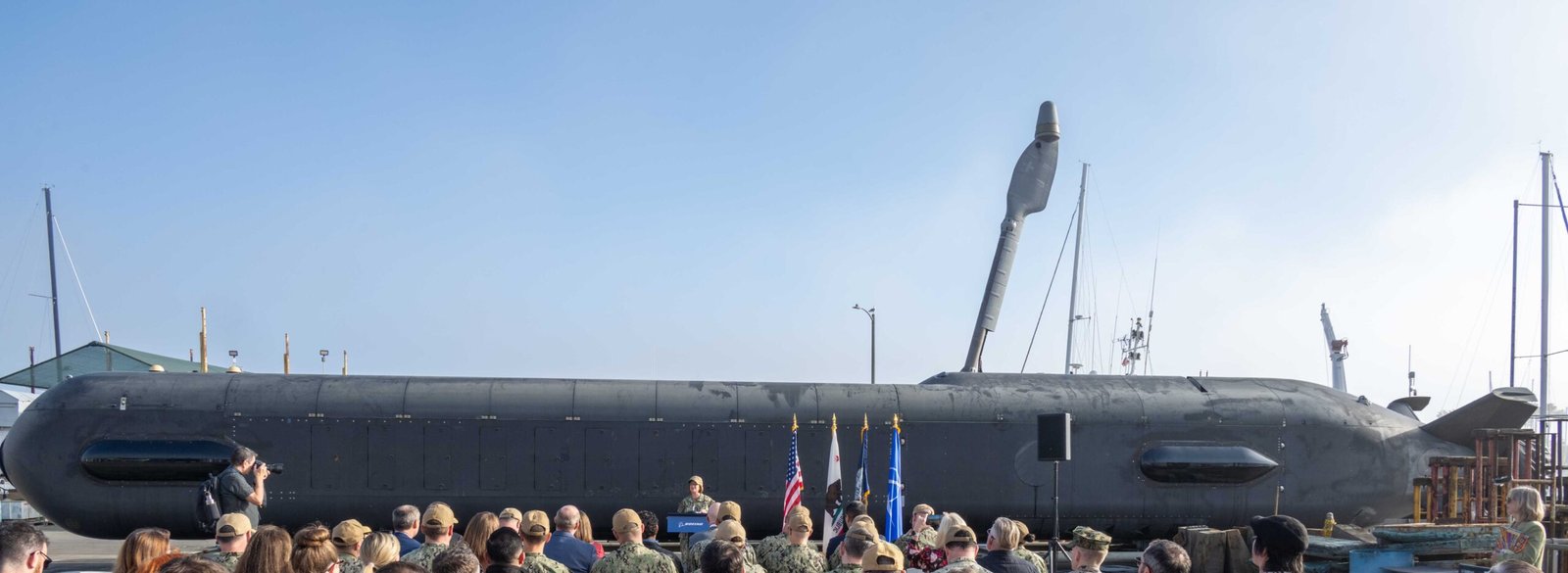
CNO Adm. Lisa Franchetti speaks in front of Boeing’s Orca Extra Large Unmanned Undersea Vehicle. Source
Another application for drones in the seabed would be the way they are currently integrated by different maritime countries as a crucial vessel to guarantee a permanent surveillance of this domain. The People’s Republic of China is currently building an “underwater great wall” using fuses fixed to seabed equipment with AUV drones operating in swarms to ensure permanent surveillance of the South China sea surface and undersea area.The U.S. has also launched a similar conceptual idea through the DASH Program run by the Defense Advanced Research Projects Agency (DARPA) which aims to integrate fixed seabed sonar nodes and sensors with AUVs acting as submarine hunters to counter today asymmetric threats and potentially tomorrow, conventional ones. The one constant objectives of all countries which have or are developing a seabed strategy is beyond all things establishing constant surveillance of their strategic assets overseas and their coasts.
Finally, one of the most interesting aspects on the future of seabed warfare is not so much about the applications but the platform itself. Underwater gliders are particularly interesting to conduct different types of missions thanks to their unique propulsion system which makes them difficult to detect, quiet as well as energy efficient. This is first of all for the mapping of the sea floor, conducting grid-based operations by collecting data on various elements over long stretches of time with a low cost.
They are also an interesting to tool to conduct persistent surveillance and anti-submarine warfare support, acting as the equivalent of “loyal wingmen” for tracking adversary submarines such as the Scolum glider employed by the Royal Navy.These gliders are able to deployed for several months and can be sent ahead of submarines acting as motherships to monitor areas ahead of the platform.However these gliders could also be used in grey zone scenarios to conduct more high risk missions while keeping a degree of deniability and could be disguised as civilian vessels around the world to monitor key maritime areas, effectively collecting data while not being categorized as a military ship.
Conclusion
Seabed warfare is developing at a rapid pace. Initial breakthroughs were achieved thanks to civilians means but as tensions rise and budget allocations increase, this new frontier will become more and more a focal point of power competition.
While it is not known what will happen in the coming decades, it is clear that the race is on. Not being part of this race could leave maritime nations potentially significantly weaker and offer gaps for competitors to exploit in times of peace and war.

Analyst in the defense industry offering insights in the drone sector
https://www.frontiersin.org/journals/physics/articles/10.3389/fphy.2025.1650284/full
https://www.ifri.org/sites/default/files/2026-03/ifri_furgolle_autonomous_systems_underwater_domain_2026.pdf
https://cgsr.llnl.gov/sites/cgsr/files/2025-12/Baker%20Final%20CGSR%20Report_December%202025%20%28002%29.pdf
https://theforge.defence.gov.au/article/autonomy-and-artificial-intelligence-hydrography-royal-australian-navys-future-workforce
https://www.defense.gouv.fr/sites/default/files/ministere-armees/20220211_GT%20MAITRISE%20FONDS%20MARINS_dossier%20de%20presse.pdf
https://digital-commons.usnwc.edu/cgi/viewcontent.cgi?article=1000&context=ciwag-policy-papers
https://e-arc.ro/wp-content/uploads/2026/04/A-Nita-Naval-Drones.pdf
https://arxiv.org/html/2605.04672v1
https://www.csis.org/blogs/new-perspectives-asia/building-undersea-power-how-china-aligns-strategy-platform-development
https://www.reanin.com/reports/armored-unmanned-underwater-vehicle-market
The Mothership Impact
https://www.spacewar.com/reports/Ghosts_of_the_Deep_Chinas_AJX_002_XLUUV_and_the_Geopolitics_of_Undersea_Power_999.html
https://www.frontiersin.org/journals/political-science/articles/10.3389/fpos.2025.1733407/full
https://www.armyrecognition.com/news/navy-news/2026/u-s-navy-funds-16-boeing-orca-drone-submarines-for-china-focused-pacific-combat-operations
https://www.royalnavy.mod.uk/news/2020/april/30/300420-glider-trials
The Future of Drone Warfare: The Rise of Maritime Drones