The Shift in the Roles of War: A Look Through the Lens of the 2022 Armed Conflict Between Kyrgyzstan and Tajikistan

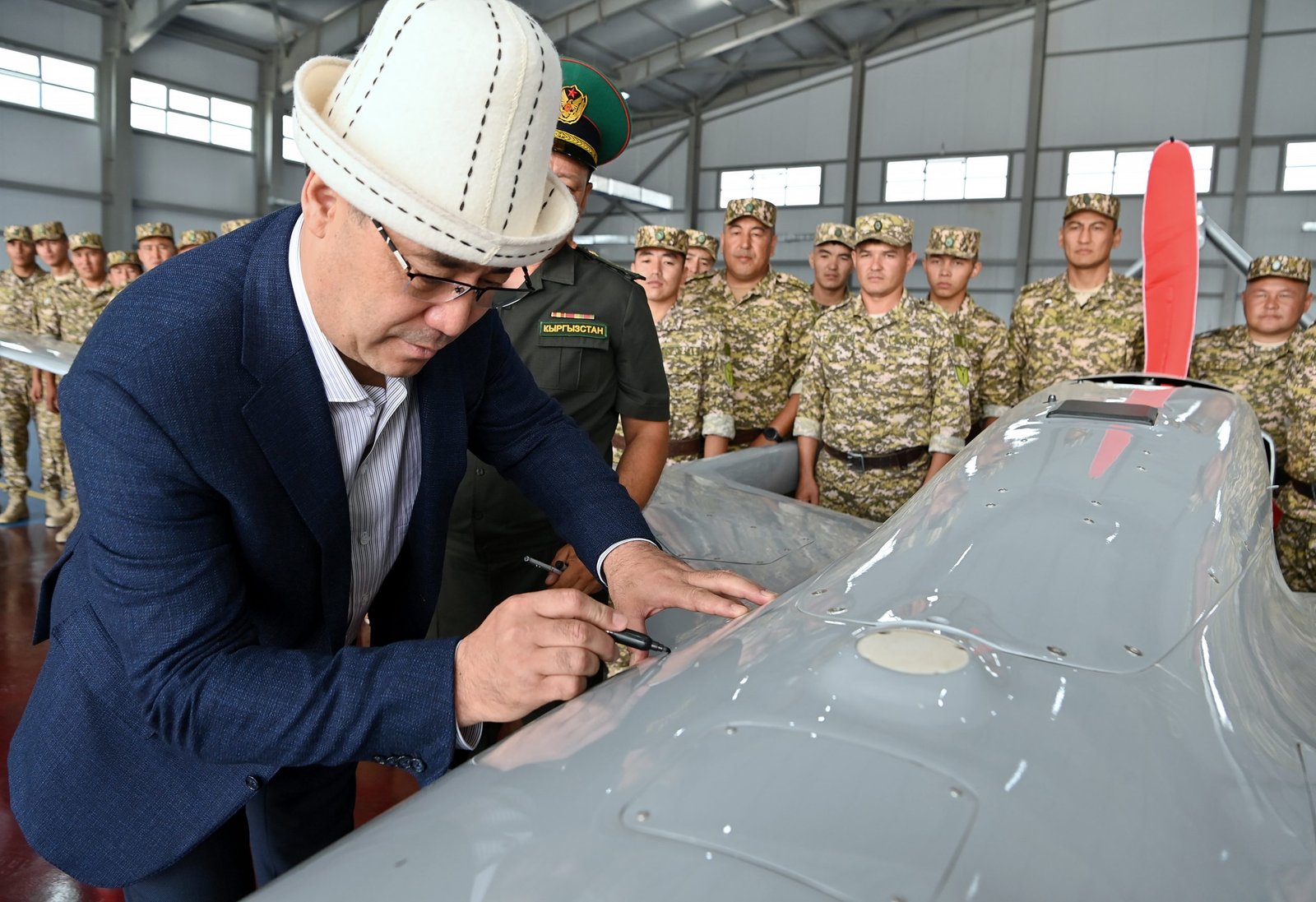
Sadyr Japarov, President of the Republic of Kyrgystan, at the opening of of the Border Service Bayraktar drone base. Source

Historical Context of the Border Conflict between Kyrgyzstan and Tadjikistan

Since gaining independence, Tajikistan and Kyrgyzstan have been at odds over the demarcation of their shared border, which stems from a lack of clarity established during the Soviet era—a source of numerous tensions among all Central Asian countries. This border crisis in the region is notable for its duration and the significant military and civilian casualties resulting from numerous deadly clashes, the most recent of which in 2021 and 2022 took on a new dimension. The Tajik-Kyrgyz conflict is characterized by the primacy of water issues and, more generally, the management of natural resources as a source of tension. However, two years and three months later, on December 4, 2024, the two countries—through their respective chairmen of the State Committees for National Security—declared the crisis resolved with the complete demarcation of their shared border, symbolically bringing an end to the longest-running Central Asian border conflict. The first of these began in 1974, stemming from the Kyrgyz population’s claim to territories that had been developed by Tajik authorities over the previous 10 years. According to several sources, on December 31, 1974, a group of Kyrgyz citizens attacked the Tajik enclave of Vorukh with automatic weapons, causing no casualties.

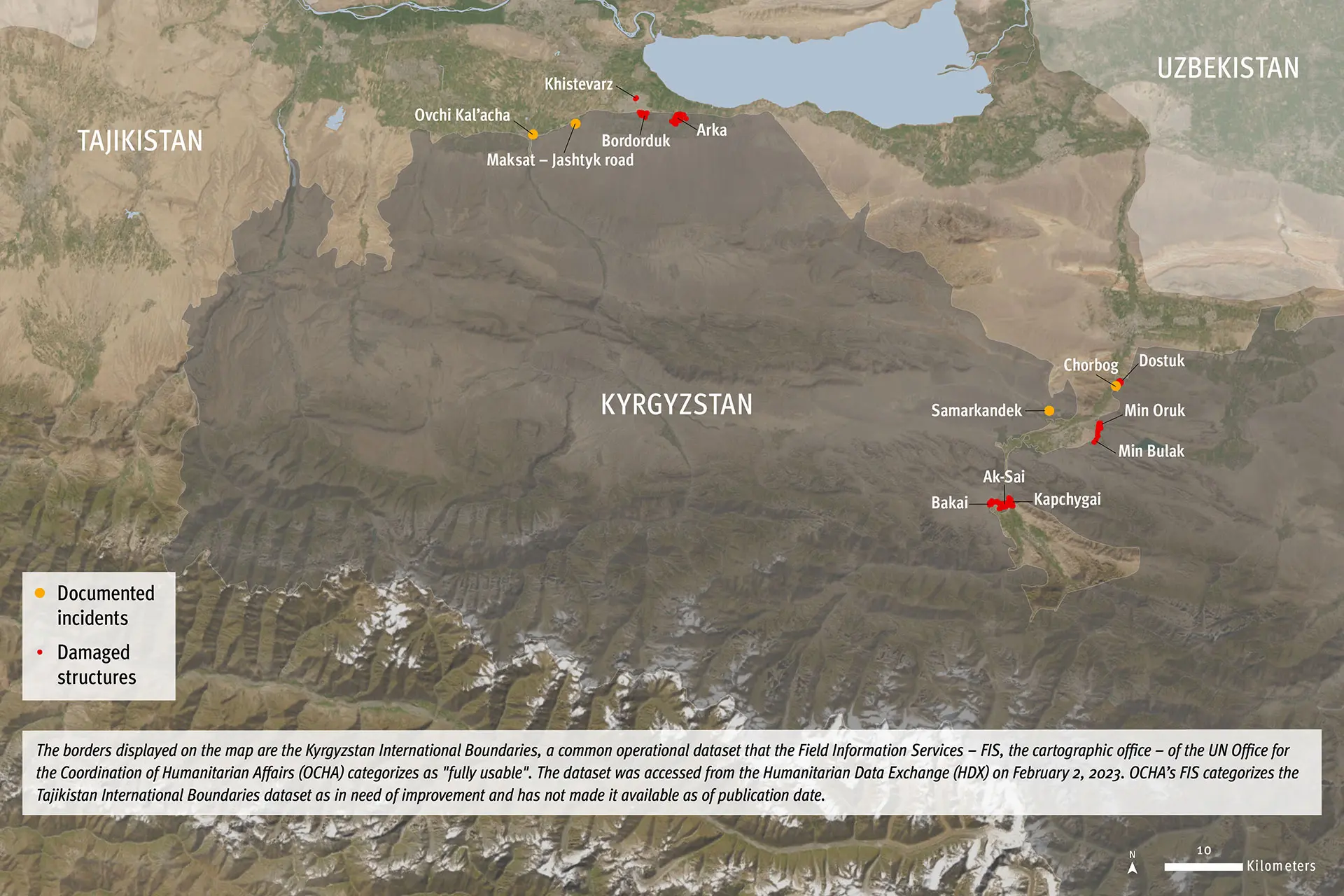
While the conflict of April 2021 marked a turning point with the use of heavy military equipment due to the direct involvement of the armed forces of both countries, the armed conflict of September 2022 remains to this day the most significant, involving the full deployment of both armies’ military resources and an outburst of violence resulting in an unprecedented number of casualties. Starting in 2021, the border dispute—previously linked mainly to the management of natural resources—escalated as clashes between civilian populations became a national and security issue for both armies, preventing any de-escalation. The year 2022 began in January with skirmishes between border guards that continued into March, killing two civilians. These incidents demonstrate the two countries’ inability to resolve their differences. Tensions have now reached a point of no return. A new skirmish on September 14 at 7:15 a.m. triggers the conflict, which some analysts have described as deliberate due to the failure to adhere to protocols. On the first day of the conflict, there are two deaths and 11 injuries. From September 16 to 17, despite the announcement of a ceasefire, the conflict spread across the entire disputed border.

This conflict is unfolding even as the two presidents are meeting in Samarkand, Uzbekistan, for the Shanghai Cooperation Organization summit. On September 17, the ceasefire held until it was broken at 11:50 a.m. A new meeting between the two presidents of the State Committees for National Security—Saimumin Yatimov for Tajikistan and Kamchybek Tachiev for Kyrgyzstan—at 7:00 p.m. brought the conflict to a definitive end. On September 20, a new meeting between Saimumin Yatimov and Kamchybek Tachiev led to the signing of a new Protocol No. 42, stating that “the demarcation of borders should be resolved in a spirit of good neighborliness and mutual understanding.” The final death toll remains a subject of debate due to each country’s desire to be seen as the victor in the clashes. In its latest report, Human Rights Watch confirms the deaths of at least 37 people, 36 injured, and 130,000 displaced. In its investigation, Radiozodi recorded 83 deaths on the Tajik side, including both military personnel and civilians, and on the Kyrgyz side, 63 deaths and more than 200 injured.


border clashes

Map depicting clashes during the conflict between the 14th and the 17th of september 2022. Source

The Pivotal role of the TB2 drones in the Kyrgyz counteroffensive

September 16, the most active day of the conflict, was marked by the first deployment of tactical drones, the now-famous Bayraktar TB-2. They were used in response to a Tajik ground offensive that had just entered a Kyrgyz village near the town of Batken, whose airport had recently been bombed.

In response, according to an investigation by Human Rights Watch, around 5:00 p.m., Kyrgyz forces used their TB-2 drone for the first time to drop a laser-guided bomb in the central square of a Tajik border village where Tajik military vehicles had just arrived. On the same day, a Tajik military vehicle equipped with a 2B9 “Vasilek” mortar was also neutralized by the Kyrgyz army following a strike using a Bayraktar TB-2 drone.

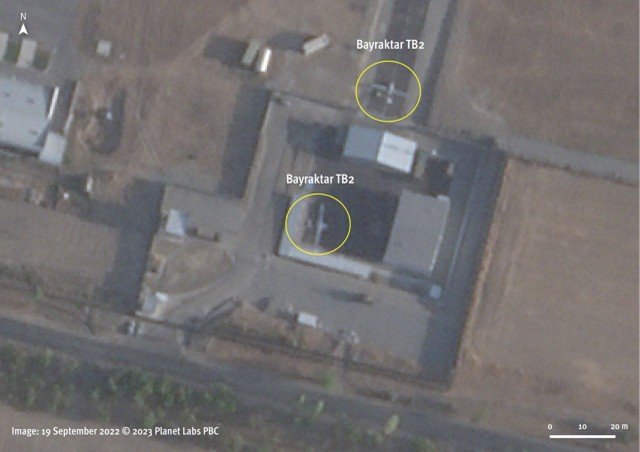
The Kyrgyz army’s use of drones during the conflict and their effectiveness in the clashes resulted from a strategy developed after the 2021 conflict, culminating in the purchase of drones at the end of the year with the clear objective of countering Tajikistan’s technological superiority. Tajikistan, due to its border with Afghanistan, has received international aid, primarily from Russia, to strengthen its military capabilities since the end of the civil war. The purchase of the drones was announced by the new Kyrgyz president on October 23, 2021, and they were received in December. An official drone base was inaugurated on September 13, 2022, by the president, just days before the clashes. Satellite images from September 9, 2022, show the presence of drones at the Kyrgyz airbase in Razzaqov.

Satellite images showing the presence of drones in the kyrgyzstani base of Razzaqov. Source

Central Asia has become, in recent years, a new El Dorado for Turkish drones, with the exception of Tajikistan, whose air force possesses RQ11-Raven drones supplied by the United States as part of the fight against terrorism, and Iranian Ababbil-2 drones. A production facility for these drones has existed on the outskirts of Dushanbe since May 2022, but these drones have proven insufficient during the conflict, and their very existence is often questioned.

Turkmenistan, along with Kyrgyzstan, was the first to reveal its possession of Turkish TB2 drones in 2021, during its annual September parade. Uzbekistan first disclosed its acquisition of several TB2 drones on November 17, 2023, during a visit by its president to a military base in Surkhandarya, near the Afghan border. More recently, Kazakhstan announced on December 26, 2025, that it had received TB2 drones for testing; no official purchase announcement has yet been made. Kyrgyzstan, meanwhile, received its order of Akinci and Aksungur drones in October 2023.

Conclusion

The doctrinal approach to drone use in Central Asian regimes remains unclear due to the lack of official publications in autocratic regimes not inclined towards transparency. It seems primarily driven by a general desire to modernize their armed forces. Like several other countries, the operational success of the TB2 drones in Ukraine appears to have popularized the purchase of Turkish drones in Central Asia, despite Kyrgyzstan’s pioneering presence. In a region where recent agreements have finally demarcated borders between all these countries, and where unity has become the key to international influence, the TB2 drones are primarily intended to anticipate the threat posed by Afghanistan, a perpetually unstable neighbor.

Picture of A S

A S

Specialist in Central Asian international relations

Leave a Reply

Your email address will not be published. Required fields are marked *